What Page in Play Therapy the Art of the Relationship Does Toys Are the Childs Words Come From
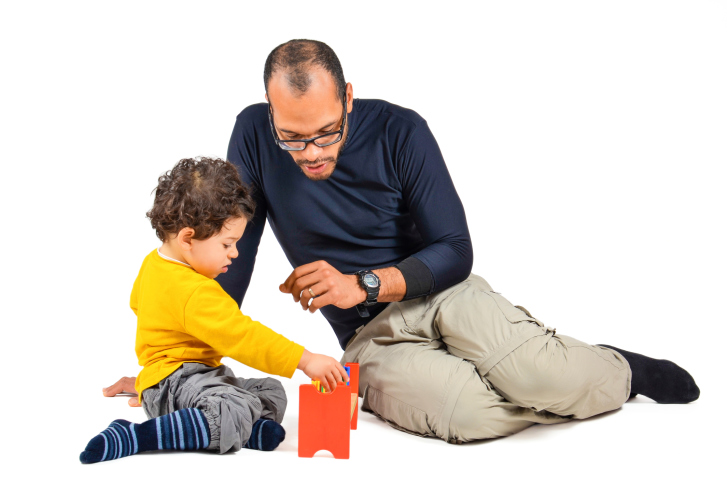 Play therapy is a class of therapy primarily geared toward children. In this class of therapy, a therapist encourages a kid to explore life events that may accept an event on electric current circumstances, in a manner and pace of the kid'south choosing, primarily through play merely besides through language.
Play therapy, tin help individuals communicate, explore repressed thoughts and emotions, address unresolved trauma, and experience personal growth and is widely viewed as an important, effective, and developmentally appropriate mental wellness treatment.
- History and Development of Play Therapy
- The Neuroscience behind the Importance of Play
- How Does Play Therapy Piece of work?
- Play Therapy for Adults
- Guidelines for Constructive Play Therapy
- Training for Play Therapists
History and Development of Play Therapy
Though some of the earliest theories and methods mentioned below are no longer practiced and may non be acceptable based on current research and upstanding standards, they did play a part in advancing play therapy to the extent that it is now regarded as an established therapeutic approach. Some cardinal individuals in the development of this therapy and their contributions to the field include:
- Hermine Hug-Hellmuth, who is widely regarded as the world's start psychoanalyst to specialize in treating children and the beginning person to use play equally a form of therapy. In 1921, she introduced a formal play therapy procedure past providing the children in her care with the necessary materials to express themselves and advocated the use of play to analyze children.
- Melanie Klein, who used play as an analytic tool likewise as a means to concenter the children she worked with to therapy. Klein believed play provided insight into a child'southward unconscious.
-
Notice a Therapist
David Levy, who developed a therapeutic approach called "release therapy" in 1938. This was a structured approach that encouraged a traumatized child to engage in free play. The therapist then gradually introduced materials related to the traumatic issue, assuasive the kid to re-feel the stressful consequence and release any unresolved emotions or deportment. - Joseph Soloman, who used an approach called "active play" to assist children who displayed impulsivity and a tendency to act out. The approach was based on Soloman's belief that expressing emotions such as fear and anger in play would result in more socially adequate behavior.
- Anna Freud, who presented theoretical arguments for the use of play every bit a means to build a positive relationship between the child and therapist, thus allowing the therapist better admission to a child's inner thoughts and emotions.
- Carl Rogers, who adult person-centered therapy during the 1940s and 1950s. This type of therapy emphasizes the importance of genuineness, trust, and acceptance in the therapeutic relationship.
- Virginia Axline, who developed nondirective play therapy by modifying Rogers' approach into a play therapy technique that was more appropriate for children.
- Roger Phillips, who posited the idea to combine cognitive therapy and play therapy in the early on 1980s. Cerebral behavioral play therapy has been used to care for children as young as two years old.
The Neuroscience behind the Importance of Play
Though play is oftentimes regarded but every bit a style for individuals, particularly children, to relax, scientific research has proven that play is a crucial factor in healthy child development. Studies prove that newborn babies possess billions of encephalon cells; all the same, these immature cells lack the complex neural interconnectivity that is characteristic of a mature, fully-functional human brain. Neuroscience has revealed that the majority of the encephalon's growth takes place inside the first five years of a child'southward life, and the human activity of play contributes significantly toward the development of interconnections between neurons. These neural links play a major role in key areas of the child's life, such as learning, social evolution, emotional development, and memory.
Play is considered to be especially important for the healthy evolution of children who have experienced stressful events or by trauma. While the effects of trauma tend to reside in the nonverbal areas of the brain—the hippocampus, amygdala, thalamus, and brain stem—a person's capacity to communicate and process adverse problems resides in the encephalon's frontal lobes. Every bit a issue, children affected by trauma may detect it difficult to allow other people know that they need help. The concrete and role-playing activities associated with play therapy have proven instrumental in helping to motion traumatic memories and sensations from the nonverbal brain areas to the frontal lobes.
How Does Play Therapy Work?
When children are experiencing adverse personal bug they will often act out or appoint in inappropriate behavior. Parents may be eager to help but may find information technology hard or impossible to offer effective assist if a kid is unable or unwilling to hash out the problem. Play therapy is idea to exist 1 of the most benign means of helping children who are experiencing emotional or behavioral challenges. Though the approach may benefit people of all ages, information technology is specially designed to care for children under 12. A typical session may final for xxx-45 minutes and may be conducted with one kid only or in groups.
During handling, the therapist creates a comfortable, safe environment in which the child is allowed to play with as few limits every bit possible. This counseling space is ofttimes referred to as a playroom, and it comes equipped with a selection of specifically chosen toys that are meant to encourage the kid to limited his or her feelings and develop healthier behaviors. The child's interactions with these toys essentially serve as the child's symbolic words. This allows the therapist to learn well-nigh specific thoughts and emotions that a child may observe difficult or impossible to express verbally.
Toys used in therapy may include a sandbox with associated miniature figurines, art materials, Legos or other construction toys, costumes or other clothing, stuffed animals, dolls, a dollhouse with miniature piece of furniture, puppets, indoor sports equipment, and other indoor games. The therapist may besides contain the use of tools and techniques such equally clay, therapeutic storytelling, music, trip the light fantastic and motility, drama/role play, and creative visualization.
At offset children in therapy are generally immune to play every bit they wish. As handling progresses, the therapist may begin to introduce specific items or play activities which are related to the issues the child is facing. Play therapy may benefit the child in a diverseness of ways such as encouraging creativity, promoting healing from traumatic events, facilitating the expression of emotions, encouraging the development of positive controlling skills, introducing new means of thinking and behaving, learning problem-solving skills, developing better social skills, and facilitating the communication of personal issues or concerns.
Play therapy may be nondirective or directive. Nondirective play therapy is grounded in the idea that if allowed optimal therapeutic weather condition and the liberty to play, children in therapy volition be able to resolve issues on their own. This approach is viewed as non-intrusive since there is minimal instruction from the therapist regarding how a kid should engage in play. Directed play therapy involves much greater input from the therapist and is based on the belief that faster therapeutic results may be obtained than in nondirective play therapy sessions.
Play Therapy for Adults
Play therapy tin can also be used to treat bug faced by teenagers and adults. By adulthood, most people have lost their ability to playfully explore themselves. Play therapists are trained to assistance adolescents, adults, and fifty-fifty the elderly relearn the values of play. Playful exploration has been proven to enhance both cognitive and concrete behaviors, and in that location is a meaning amount of research from the fields of neurophysiology and molecular biology that supports play therapy as a valid therapeutic technique for those past childhood. A growing number of organizations and experts are dedicated to play enquiry and advocacy, assertive that play is important for people of all ages.
Play has been shown to optimize learning, heighten relationships, and meliorate health and well-being. Adults and children engaged in a therapeutic alliance that focuses on play have an opportunity to choose from a variety of modalities such as movement (body play), sand play, dream play, nature play, social play, pretend (fantasy) play, creative play, storytelling, and vocal play. Play therapy may be used to address a diverseness of health challenges experienced by adults, peculiarly if incorporated with other treatment modalities. One of the nigh significant benefits is that play can provide a comfortable and safe surroundings that may prompt an adult to arroyo more serious problems.
Play therapy can be used to treat (in children or adults):
- Dementia
- Grief and loss
- Posttraumatic stress
- Obsessions and compulsions
- Attention arrears hyperactivity
- Mood problems
- Anxiety
- Low
- Developmental issues
- Arrested emotional evolution
Guidelines for Constructive Play Therapy
Play therapy has proven to be an effective therapeutic approach for people from all historic period groups, though minors respond particularly well to this type of treatment. Therapists may employ several general guidelines and practices in treatment in order to foster the greatest benefits for people in their intendance.
When working with a child, a therapist may provide adjunctive therapy for adults who play central roles in the kid's life. Throughout therapy, the therapist will typically place emphasis on the promotion of mental health and psychosocial evolution, explaining treatment plans to the person receiving handling and a child's legal guardians, if necessary. Therapists may besides coordinate treatment with doctors or other wellness intendance professionals to ensure that a kid's welfare remains the handling priority. If inappropriately touched by a kid in treatment, the therapist may detect it best to explain that information technology is important that each person's body is respected, document the issue, then discuss the situation with the child'southward legal guardians at the primeval opportunity. A therapist may besides find information technology necessary to make arrangements to prevent the child, or any person they are treating, from feeling abased, should there be a break in handling.
Training for Play Therapists
Mental health professionals who seek specialized training and feel in play therapy may earn their credentials from the Association for Play Therapy (APT). The APT is a nationally recognized professional institution which aims to farther the play therapy modality and advance the expertise and knowledge of mental wellness professionals involved in the clinical practice, didactics, and supervision of play therapy. The APT offers ii standard credentials: the Registered Play Therapist TM (RPT) and the Registered Play Therapist-Supervisor TM (RPT-S).
Applicants desiring to become a Registered Play Therapist TM must:
- Possess an active private state license which allows him or her to independently provide clinical mental health services.
- Have earned a master's degree or higher in a mental health field, with special accent on areas such as child development, psychotherapy, theories of personality, ethics, or child and adolescent psychopathology.
- Accept two years of general clinical experience (equally required for state licensure) and 2000 hours of general mental health clinical experience.
- Complete 150 hours of play therapy pedagogy from APT-approved providers or third level academic institutions.
To become a Registered Play Therapist-Supervisor TM, an applicant must also have 500 hours of experience in play therapy, conducted under supervision, plus an boosted l hours of field-specific supervision.
The Registered Play Therapist TM (RPT) credential lasts for one yr, and it must be renewed annually to maintain agile status. To qualify for renewal, the applicant must have a current and agile state license to offering clinical mental wellness services and follow a standing educational activity cycle by receiving 18 hours of instruction specific to play therapy from a 3rd level academic institution or an APT-approved provider every 36 months.
References:
- Bratton, S. C., Ray, D., Rhine, T. & Jones, L. (2005). The efficacy of play therapy with children: A meta-analytic review of handling outcomes. Professional person Psychology: Inquiry and Practise, 36(4), 376-390. Retrieved from http://www.moplaytherapy.org/uploads/media/Research_The_efficacy_of_play_therapy_with_children.pdf
- British Clan of Play Therapists. (2013). History of play therapy. Retrieved from http://www.bapt.info/play-therapy/history-play-therapy
- Eugster, Thousand. (2007). Play therapy: How it helps children experience ameliorate and improve behavior. Retrieved from http://www.kathyeugster.com/articles/article003.htm
- Guerrero C. & Vega, C. (2014). Credentialing guide: Registered play therapist (RPT) and Supervisor (RPT-Southward). Retrieved from http://c.ymcdn.com/sites/www.a4pt.org/resources/resmgr/RPT_and_RPT-S_Credentials/RPTS_Guide.pdf
- Homeyer, L. E. & Morrison, M. O. (2008). Play therapy: Practice, problems and trends. Retrieved from http://www.journalofplay.org/sites/www.journalofplay.org/files/pdf-articles/1-2-article-play-therapy.pdf
- Play Therapy U.k.. (n.d.). An introduction to play therapy. Retrieved from http://www.playtherapy.org.u.k./Resources/Manufactures/ArticleMBIntro1.htm
- Sprunk, T., Colwell, Northward. K., Mitchell, J. A., Smith, J., Carmichael, Grand. & Frick-Helms, K. (2012). Play therapy best practices. Retrieved from http://c.ymcdn.com/sites/world wide web.a4pt.org/resources/resmgr/Publications/Play_Therapy_Best_Practices.pdf
- Ward-Wimmer, D. (2002). Introduction: The healing potential of adults at play. Retrieved from http://www.psychceu.com/Schaefer/intro.pdf
Source: https://www.goodtherapy.org/learn-about-therapy/types/play-therapy
Belum ada Komentar untuk "What Page in Play Therapy the Art of the Relationship Does Toys Are the Childs Words Come From"
Posting Komentar